




PSA | DA Hoovler Launches “You’re Not Seeing This” on Unity Day
Billboards, Posters, and Practical Resources Help Families Recognize Online Harm and Find Support
Orange County District Attorney David M. Hoovler today announced the launch of “You’re Not Seeing This,” a public education campaign helping parents and caregivers recognize online harm, talk with their children, and find help when something goes wrong.
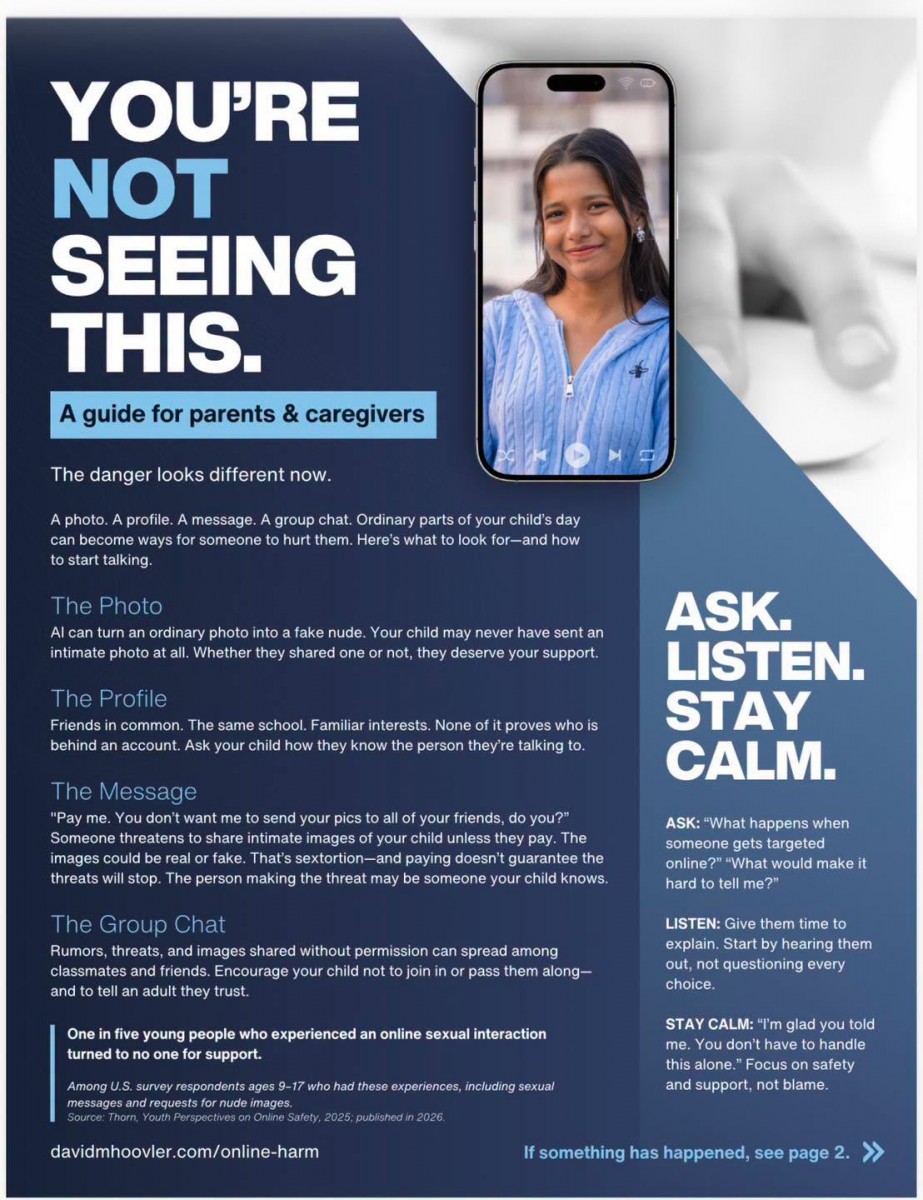
The initiative brings together billboards, posters for parents and young people, a social media series, and a dedicated webpage with a free, two-page parent guide. Together, these resources will help families recognize concerning situations, start conversations, and know where to turn for help.
The launch coincides with Unity Day, the signature event of National Bullying Prevention Month, created by PACER’s National Bullying Prevention Center. The day encourages kindness, acceptance, and inclusion to prevent bullying, with participants wearing orange to show their support.
District Attorney Hoovler’s visits to high schools and conversations with students, athletes, and sports teams across Orange County over the summer and into the fall helped shape the initiative.
“Some of what I’ve heard and seen while spending time with students and sports teams has really stuck with me,” said District Attorney Hoovler. “We need to understand the world our kids are growing up in and make sure they know they can come to us when they need help.”
“You’re Not Seeing This” focuses on four familiar parts of young people’s online lives:
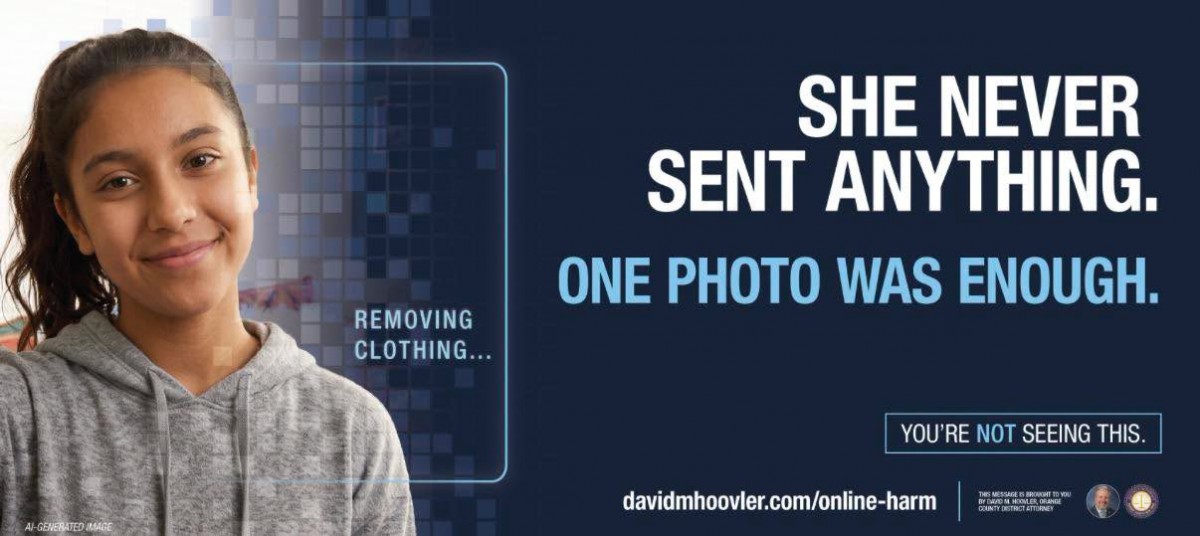
• The Photo. An ordinary photo can be altered with artificial intelligence to create a fake nude image, even when a child has never shared an intimate photo.
• The Profile. Mutual friends, familiar interests, and convincing photos do not prove who is behind an account.
• The Message. Someone threatens to send intimate images to a child’s friends, teammates, or family unless the child pays. The images can be real or fabricated. This is a form of sextortion.
• The Group Chat. Rumors, threats, and images shared without permission can spread among classmates and friends.
Two billboard designs, The Photo and The Profile, will introduce the campaign and direct families to its webpage. Parent posters will reinforce the four examples, while school posters will speak directly to young people about threats, peer harm, and how to get help. Social posts will extend those messages online and encourage families to use and share the guide.
One in five U.S. survey respondents ages 9–17 who experienced an online sexual interaction turned to no one for support, according to Thorn’s Youth Perspectives on Online Safety, 2025, published in July 2026.
The person causing harm is not always a stranger. In a separate Thorn U.S. survey published in 2025, 36% of respondents who experienced sextortion as minors knew the person threatening them offline during their first experience. That finding concerns sextortion broadly, not only demands for money.
The campaign’s guidance to adults is simple: “Ask. Listen. Stay calm.” Start conversations before there is a crisis. Ask how a child knows the people they talk to online, what happens when someone is targeted in a group chat, and what would make it hard to ask for help.
“A child who is frightened or embarrassed needs to know you will help, even if they trusted someone, sent a photo, or already paid,” District Attorney Hoovler said. “Start with, ‘I’m glad you told me.’ Listen to what happened, focus on their safety, and help them get support.”
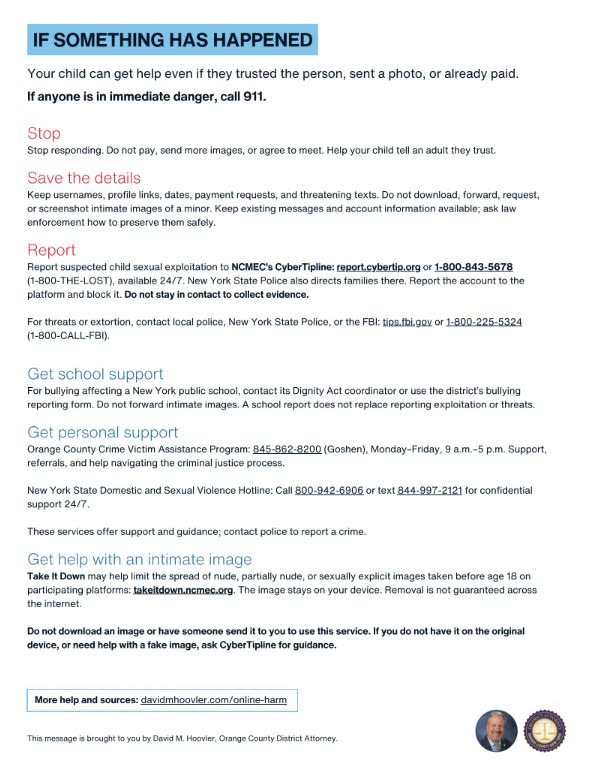
The webpage and guide also provide clear response steps: “Stop. Save the details. Report.”
Families are urged to stop contact, preserve account details and threatening messages safely, and report suspected exploitation. They should not download, forward, or screenshot intimate images of a minor. Links connect families with reporting services, help with intimate images, school support, and victim services in Orange County and New York.
Parents and caregivers can read the guidance and download the free guide at davidmhoovler.com/online-harm. Educators, coaches, and community organizations are encouraged to share the resource with families.
Report suspected child sexual exploitation to the National Center for Missing & Exploited Children’s CyberTipline at report.cybertip.org or call 1-800-843-5678. For threats or extortion, contact local law enforcement or the FBI. If anyone is in immediate danger, call 911.
ATTENTION: Are your scholars or colleagues doing something great? Please contact the district Communications Team at communications@necsd.net. We’d love to visit your class or event and/or post your pictures and recap to highlight the amazing accomplishments throughout our district!